
Category Archives: Heritage at Risk Register

H@R 172/365 Row of houses & shops with Deco-style influence Sadar Bazaar, Delhi
bldg 1

H@R 172/365

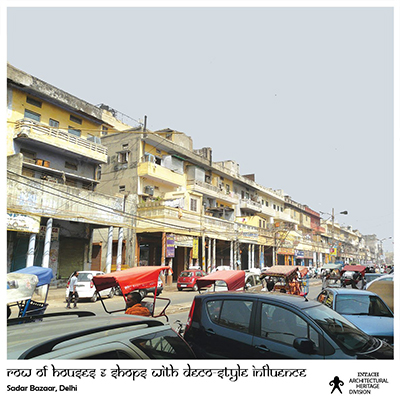
Row of houses & shops with Deco-style influence Sadar Bazaar, Delhi

Row of houses and shops with Deco-style influence can be seen in Basti Harphool Singh, Sadar Bazaar. These buildings are in a state of decay, lacking maintenance and repair. In the usual narrative of Delhi’s development, the buildings of the 20th century in the style of Deco are either forgotten or marginalized, and many if not most of these structures are fast dilapidating, being altered and torn down. The residences of 1920s-1950s need to be classified and categorized according to their designs and other criteria and need to be contextualized within the description of 20th century architecture in India. Examples of such neighbourhoods need to be preserved and promoted as representations of a particular era of modernity and modern Indian architectural evolution.
H@R 171/365 Residence Diu

bldg 1

H@R 171/365

Residence Diu

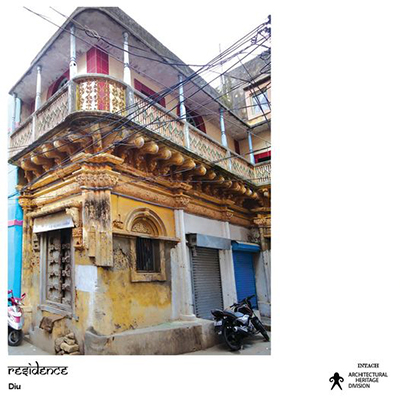
Numerous historic residential buildings are still present in Diu, such as this residence at Saurakhiya Street. It was constructed in 1910 CE. The exteriors are ornate; however, they are in a state of decay. Owing to lack of awareness of the historical value, the interiors of many such residences have insensitive additions and alterations. Plaster and paint have also spalled off in this case. Heritage structures can be preserved with the willingness of owners and users by providing sufficient technical and financial incentives to retain their unique heritage. INTACH had undertaken an Integrated heritage development plan for Diu in 2015.

H@R 170/365 Vernacular homes of Mishmi tribe community Lower Dibang Valley, Arunachal Pradesh

bldg 1

H@R 170/365

Vernacular homes of Mishmi tribe community Lower Dibang Valley, Arunachal Pradesh

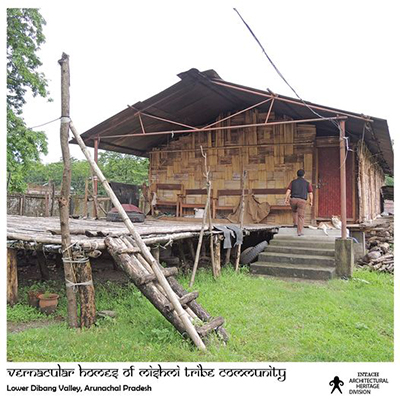
Located in Edgingo village, Roing, Lower Dibang Valley. Vernacular houses are generally reconstructed every few years, keeping the building tradition and skills alive. This home was built in 1984. Construction materials include jing patta roof, cheshmabera walls and bamboo. They are in danger of disappearance. Vernacular architecture that has developed and refined over generations is at threat due to wide-scale infrastructure development in the region, which is not sensitive to natural and built heritage.

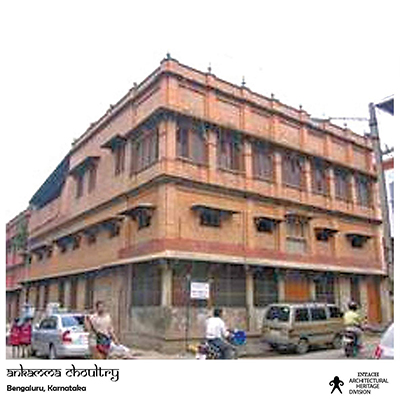
H@R 169/365 Ankamma Choultry Bengaluru, Karnataka

bldg 1

H@R 169/365

Ankamma Choultry Bengaluru, Karnataka

Located in Ulsoor, Bengaluru. This Choultry is a 1934 period brick building which likely came up in the vicinity of the Someshwara temple as need was felt for a place to conduct rituals and marriages. A part of the building was demolished during metro line construction. Even though its structural condition is fair, the future of the historic building is uncertain due to the private structure being under dispute. Heritage properties are vulnerable to neglect in cases of disputed or division of properties. Unclear ownership and poor access impact maintenance and vulnerability.

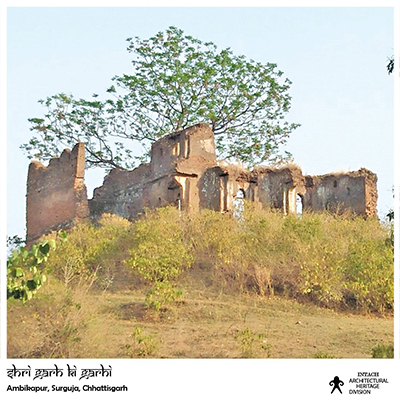
H@R 168/365 Shri Garh ki Garhi Ambikapur, Surguja, Chhattisgarh

bldg 1

H@R 168/365

Shri Garh ki Garhi Ambikapur, Surguja, Chhattisgarh

Shri Garh ki Garhi is located at a distance of 3 km from Mahamaya Mandir (which is 2 km from the Ambikapur Mukhyalaya). The structure from 1500s CE is believed to have been a fortress in the past. It is in an advanced state of decay. The roof of the derelict structure is completely destroyed. The walls are about 4 feet in thickness and the fortress is constructed of bricks with mud and lime mortar. Similarly, the royal grain storage, the dilapidated bhandarghar, is awaiting its eventual collapse.

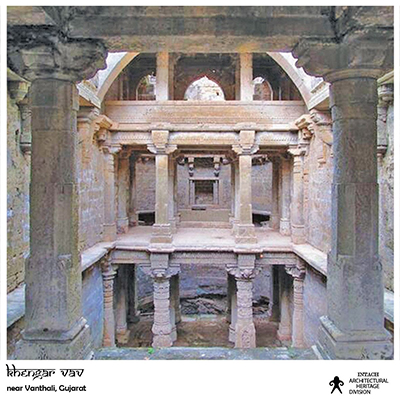
H@R 167/365 Khengar Vav near Vanthali, Gujarat

bldg 1

H@R 167/365

Khengar Vav near Vanthali, Gujarat

Located at Agriculture campus, Junagadh Veraval Highway, Near Vanthali. 10th century CE stepwell, associated with King of Junagadh, Vanthali Rah Khengar. It faces lack of maintenance. Historic water structures are among the unique built heritage typologies of our country. Neglect is the key issue pertaining to them as they are apparently redundant. This leads to either structural distress or their use as garbage dumps. This common narrative of historic water structures can be turned around as an opportunity for revival and water harvesting since water is a valuable, depleting resource.

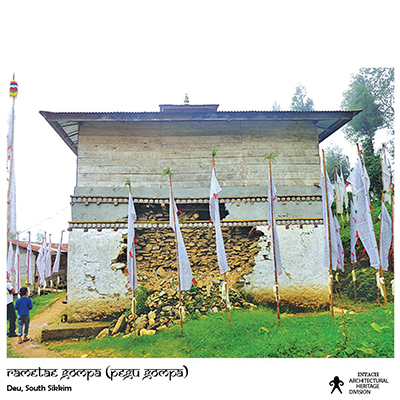
H@R 166/365 Rametae Gompa (Pegu Gompa) Deu, South Sikkim

bldg 1

H@R 166/365

Rametae Gompa (Pegu Gompa) Deu, South Sikkim

Located at Pegu Hill, Deu, Damthang-Rabongla Road, South Sikkim. A small shrine was present at the site before the gompa was built. The gompa from 1960 CE is in an advanced state of decay. It was damaged in the 2011 earthquake and the entire rear side was destroyed. The small square shaped, double storey Gompa measures 8m x 8m. The entrance is through a plain vestibule supported on 2 timber columns with carved capitals. The lower floor is built of stone, laid in mud masonry and upper floor in timber.

H@R 165/365 Deshmukh Garhi at Malkavathe near Solapur, Maharashtra

bldg 1

H@R 165/365

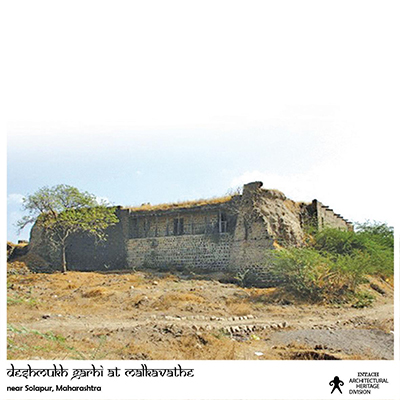
Deshmukh Garhi at Malkavathe near Solapur, Maharashtra

This fortress dating from 18th century CE is located about 35 km south of Solapur. Abandoned since 1990, the place is home to bats, monkeys and stray animals. Entangled ownership disputes have resulted in the vacant status. Structural safety has suffered in places. In rural areas and semi-urban areas of Solapur district, such built heritage is getting ruined owing to disuse and negligence. Public awareness along with stringent laws, with the provision of incentives and penalties, will go a long way in achieving safeguards for built heritage.

H@R 164/365 CNI Boys’ Inter College School complex Paltan Bazaar, Dehradun, Uttarakhand

bldg 1

H@R 164/365

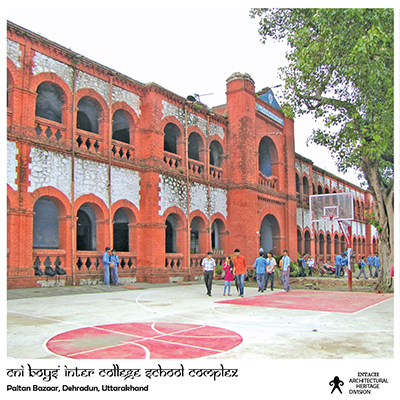
CNI Boys’ Inter College School complex Paltan Bazaar, Dehradun, Uttarakhand

In Mussoorie, some of the earliest boarding schools were established in the 1840s, and by 1884, Mussoorie was known as the ‘Edinburgh of the East’, an educational centre. Within the historic core, Church of North India Boys’ Inter College School complex is a large area with one of the few, invaluable open spaces within this dense area. Sections of the historic main building are highly dilapidated, and some rooms, including the main hall at first floor level, have been closed as they are considered to be in danger of collapse. Major water ingress from roof is affecting the structure. Tie-rods provided earlier have proved ineffective. Immediate structural assessment and action for structural stabilisation, consolidation, retrofitting and upgradation is required.  Heritage management plans are required for optimal utilisation of complexes such as this.

H@R 163/365 Vernacular homes of saree weavers Pura Dulhan & other villages near Mubarakpur, Uttar Pradesh

bldg 1

H@R 163/365

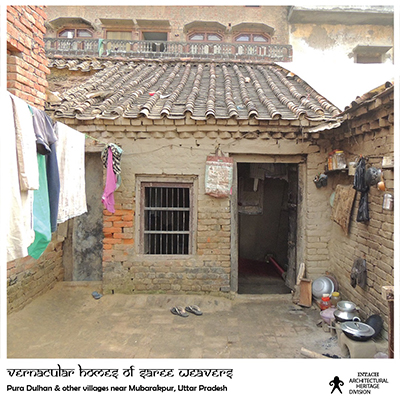
Vernacular homes of saree weavers Pura Dulhan & other villages near Mubarakpur, Uttar Pradesh

Mubarakpur and Varanasi have been known for the production of Banarasi sarees since the Mughal era. Both boast of fine weaving skills but no attention is given to the living-cum-work spaces producing the finest pieces. The dual-purpose vernacular architecture, located in traditional community clusters, is an extremely critical aspect of keeping alive the ancient craft of hand loom weaving. They are in a state of deterioration. With pressures of urbanisation, there is a risk of disappearance of the built heritage typology. The main reason behind the changes in built material is lack of awareness among the users and authorities about the benefits of traditional houses. INTACH has been making efforts since 2015, to study the vernacular houses of saree weaving clusters in India, especially the clusters that are on UNESCO’s Tentative List of World Heritage Sites, in the states of Madhya Pradesh, Uttar Pradesh, Telangana, Maharashtra and Assam.