
Category Archives: Heritage at Risk Register

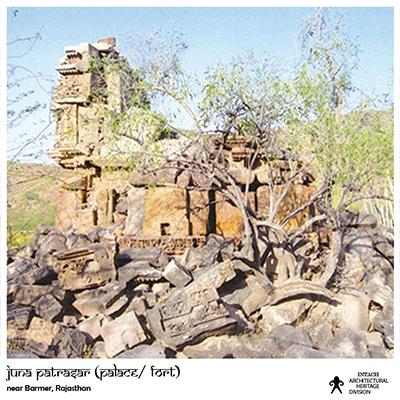
H@R 162/365 Juna Patrasar (Palace/ Fort) near Barmer, Rajasthan
bldg 1

H@R 162/365

Juna Patrasar (Palace/ Fort) near Barmer, Rajasthan

Located 28 km from Barmer, on Jasai Radwa Road, there is no proper access or signage to this historically important site. It dates from 10th century CE, Vikram Samvat 1053. Here, there are temples of Aadinath that are not in good condition. Archaeological remains of an old civilization have also been found here. Almost the entire fort has collapsed and only the walls remain. The place is under the Forest Department. There is potential to revive the place with the help of the local community.
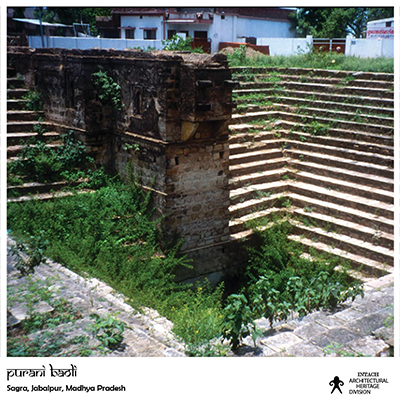
H@R 161/365 Purani Baoli Sagra, Jabalpur, Madhya Pradesh

bldg 1

H@R 161/365

Purani Baoli Sagra, Jabalpur, Madhya Pradesh

The ancient stepwell is located near Kal Bhairao Mandir, Sagra and is accessed from Bhedaghat road. It belongs to the Kalchuri period. It shows signs of deterioration. The baoli faces natural as well as human-induced threats as well as pressures due to urbanization in the area. It comes under the purview of the district administration.

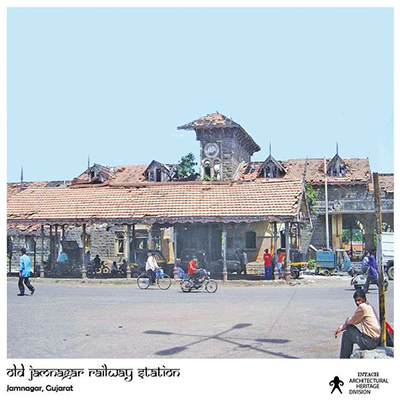
H@R 160/365 Old Jamnagar Railway Station Jamnagar, Gujarat

bldg 1

H@R 160/365

Old Jamnagar Railway Station Jamnagar, Gujarat

Old Jamnagar Railway Station dates from 1897 CE. It is among the oldest railway stations in India and a unique cultural heritage. In 2010, it was proposed to be a hotel. Many historic railway stations such as this are in danger of disappearance. They form part of our civic built heritage. There is a need to generate more awareness for this typology of built heritage.

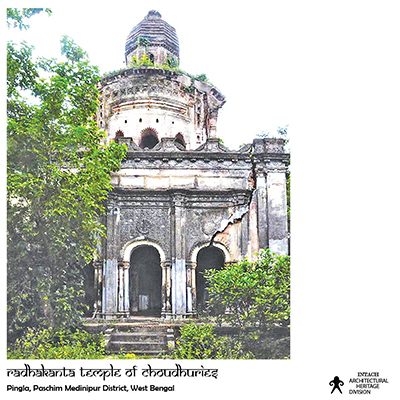
H@R 159/365 Radhakanta Temple of Choudhuries Pingla, Paschim Medinipur District, West Bengal

bldg 1

H@R 159/365

Radhakanta Temple of Choudhuries Pingla, Paschim Medinipur District, West Bengal

Located in Pingla Block, Paschim Medinipur District. Inscriptions on walls indicate that it was founded by Anadapal Chowdhuri in 1857 and the chief mason was Haridas Mistry of Daspur. An unusual structure with decorative features – combination of European, Late medieval, Mughal and Orissa influence. Such built heritage requires incentives like setting up of a repair fund, access to grants, tax exemptions etc for private owners. Has noteworthy stucco work and terracotta decorations. Features include flat-roofed chandni structure, multifoil arches, European classical columns with Bangla type curved cornice on first floor, pancharatna ridged towers and finials on top. The structure is in an advanced state of decay as it is abandoned, not maintained. Cracks, dampness, vegetation growth are serious threats. Sadananda Shiva Temple and Rashmancha are in the same complex.

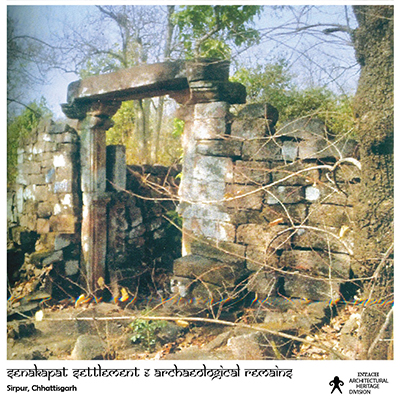
H@R 158/365 Senakapat settlement & archaeological remains Sirpur, Chhattisgarh

bldg 1

H@R 158/365

Senakapat settlement & archaeological remains Sirpur, Chhattisgarh

Senakapat village is a settlement south of Sirpur. It was relocated here about 30 years ago from near Raikhera tank, due to the frequent flooding of River Mahanadi. Although a typical Chhattisgarhi village, Senakapat is unique by virtue of its current location. Remains and findings indicate that the location was once part of the entrance to the ancient city of ‘Sripura’, the capital of Daksin Kosala. The settlement is over the archaeological remains. There is a Senakapat tank and Shiv temple near the village. The remains of Senakapat Dwara rest over the temple. Any new developments need to be sensitive to the significant archaeology of the place. INTACH had prepared a Tourism Development Plan for Sirpur in 2009.

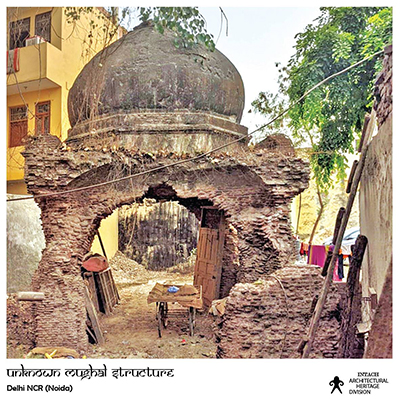
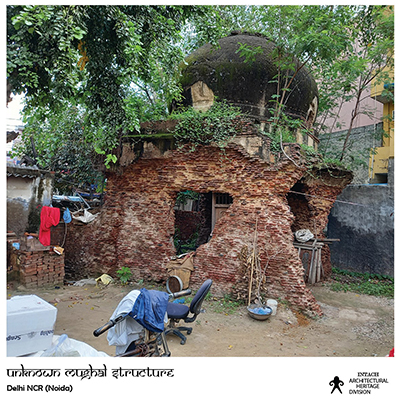
H@R 157/365 Unknown Mughal structure Delhi NCR

bldg 1
bldg 1

H@R 157/365

Unknown Mughal structure Delhi NCR

The structure is located on Sadarpur main road, Sector 45, Noida (in National Capital Region). It is likely from late Mughal period. Mainly the dome survives of the crumbling structure. It is in danger of disappearance. There is lack of value for such significant remains of our heritage, and therefore they face the prevalent condition of decay. Encroachments and unauthorized construction around heritage premises are a direct result of the fact that no significance is attached to them by the stakeholders. Such notions stem from the general indifference and insensitivity towards heritage because neither our education system nor our society stresses on its importance and relevance.

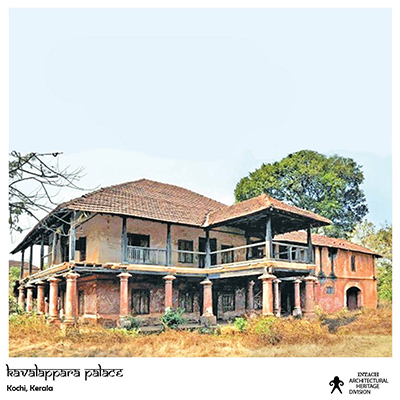
H@R 156/365 Kavalappara Palace Kochi, Kerala

bldg 1

H@R 156/365

Kavalappara Palace Kochi, Kerala

19th to 20th century CE. Houses rare records of the ancient Mooppil Nair family, the legendary landlords who owned the palace and land under Valluvanad and erstwhile Cochin state. It was brought to attention in an article in ‘The Hindu’ in 2015. It once stood for royalty and grandeur but is now in an advanced state of decay. There is excessive vegetation growth in the eight-acre premises. The rare documents that throw light on the administration of the erstwhile Swaroopams and medieval history of Kerala are also in a state of neglect. The palace involved litigations. Though main buildings have been auctioned in mid-80s and the contractors have removed them, some structures like an Oottupura and Maalika Chuvadu still remain, evoking a unique old world charm despite the ruin.

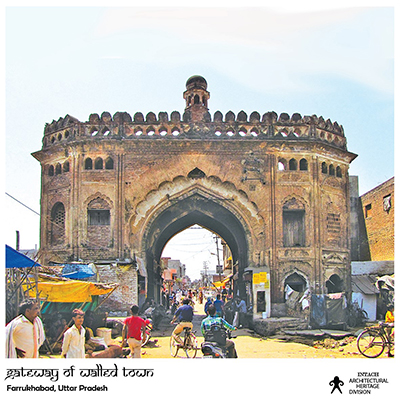
H@R 155/365 Gateway of Walled town Farrukhabad, Uttar Pradesh

bldg 1

H@R 155/365

Gateway of Walled town Farrukhabad, Uttar Pradesh

This is a gateway of the walled town of the early 18th century town of Farrukhabad. It has unique ornamental bird figures, however they have deteriorated. An extremely significant heritage lies in a dilapidated condition. This is an example of the numerous other grossly neglected magnificent structures. Awareness of one’s heritage must be compulsorily included in the education system and curriculum; only then there is hope of sensitizing future citizens. This domain has an important cause and effect towards people’s perception of heritage. And is the key to addressing apathy, vandalism, neglect and insensitivity towards heritage.

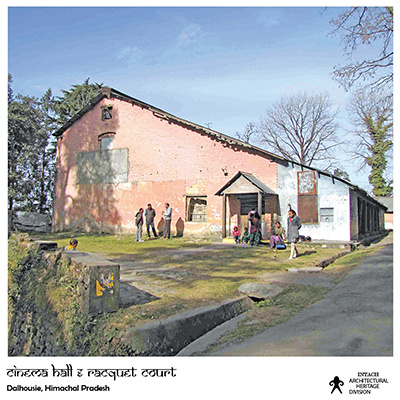
H@R 154/365 Cinema Hall & Racquet Court Dalhousie, Himachal Pradesh

bldg 1

H@R 154/365

Cinema Hall & Racquet Court Dalhousie, Himachal Pradesh

Situated above slant road from Bulls Head Corner, Dalhousie. Located on the site of Assembly and Reading Rooms. This 1881 CE structure has seismic-resistant timber cross-bracing. It is deteriorating; however, this large span structure is suitable for adaptive reuse. Capacity building for conservation, retrofitting, adaptive reuse and preventive maintenance is required. Heritage management plans for optimal utilisation of the heritage resources of recreational and institutional complexes, as well as initiatives for traffic calming and management, are necessary. Within the historic hill station of Dalhousie, zone-specific approaches are required for integration of heritage resource conservation into the Development Plan.

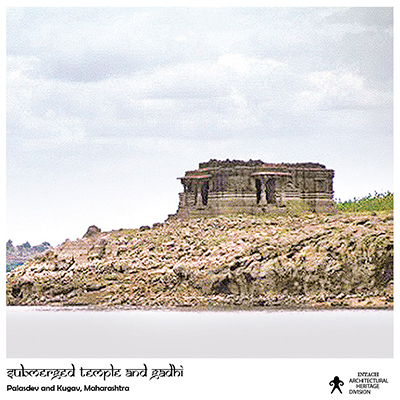
H@R 153/365 Submerged Temple and Gadhi Palasdev and Kugav, Maharashtra

bldg 1

H@R 153/365

Submerged Temple and Gadhi Palasdev and Kugav, Maharashtra

In the Ujani Dam on Bheema river (at the border of Pune and Solapur districts), a Gadhi at Kugav has been submerged. It is a fortress-like residential structure from 18th-19th century CE. In the nearby village Palasdev, a Chalukyan temple belonging to 11th-12th century CE has submerged. The shikhara shows marks of various levels of water. These structures are revealed seasonally and INTACH Solapur Chapter has been following up consistently to bring the cases to attention of the authorities. However, urban pressures result in development of infrastructure and services that are often inconsiderate to built heritage.