
Category Archives: Heritage at Risk Register

H@R 142/365 Sardul Singh Chhatri Parsurampura, Jhunjhunu District, Rajasthan
bldg 1

H@R 142/365

Sardul Singh Chhatri Parsurampura, Jhunjhunu District, Rajasthan

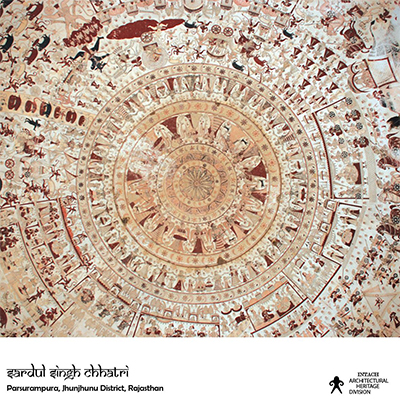
The dome of the 1750 CE chhatri rests on 12 pillars. The chhatri has simple exteriors and detailed painted interiors. It shows signs of deterioration. The painted circular courses of the dome interior consist of floral patterns and figures. There are illustrations from the scriptures as well as from the life of Sardul Singh. He was a Kachwaha Rajput who took over Jhunjhunu, Shekhawati from Kyamkhani Nawabs, thus re-establishing Shekhawat rule in the region. He is known for developing a new system of property division among descendents.
H@R 141/365 Shakti Mills Mumbai, Maharashtra

bldg 1

H@R 141/365

Shakti Mills Mumbai, Maharashtra

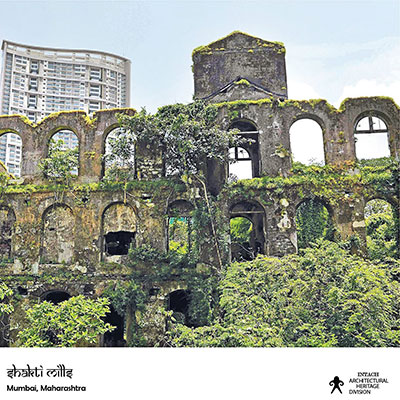
Located in Mahalaxmi area, Mumbai. The 19th century CE mills are abandoned and in an advanced state of decay. The mill neighbourhoods of central Mumbai developed after the establishment of the first spinning mill in 1854. The mills plunged into an irreversible decline by the mid-1970s as they lost out to the rapidly growing power loom industry. Shakti Mills is one such space that was left out from gentrification because of continuing litigation.

H@R 140/365 Pataur roof vernacular homes of saree weavers Bahar Shahar, Chanderi, Madhya Pradesh

bldg 1

H@R 140/365

Pataur roof vernacular homes of saree weavers Bahar Shahar, Chanderi, Madhya Pradesh

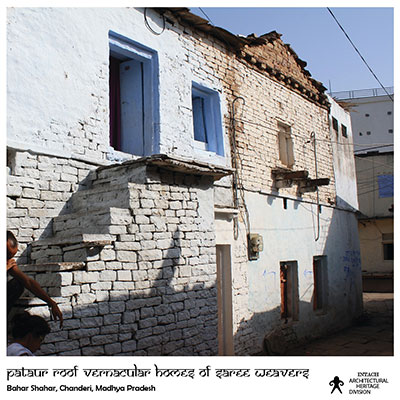
The dual-purpose vernacular architecture, located in traditional community clusters, is an extremely critical aspect of keeping alive the ancient craft of handloom weaving. Recognizing the aspects of the significance attached to weavers’ homes of Chanderi, they are part of the series titled ‘Iconic Sari Weaving Clusters of India’ on UNESCO Tentative List for World Heritage Sites. Built with local materials, responding to local climate, with region-specific layouts and design elements. These traditional homes are in the nature of artisanal workshops, providing under one roof, living space for the family as well as working space to accommodate the looms and other ancillary equipment for the home-based occupation. This urban fabric is now under serious threat from increasing population density and the pressures of economic and social change. With pressures of urbanisation, there is a risk of disappearance.

H@R 139/365 Dehra branch of Rajpur Canal Doon Valley, Uttarakhand

bldg 1

H@R 139/365

Dehra branch of Rajpur Canal Doon Valley, Uttarakhand

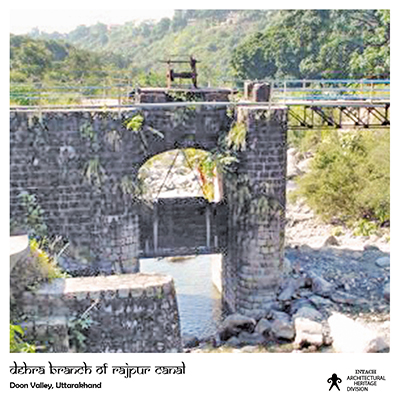
Very unique to the Doon Valley is its network of canals. The canals of Doon date back to about 1757, the time of Rani Karnavati. The major canals of Doon in the year 1873 were the Beejapore, Rajpur, Kutha Pathar, Khalunga and Jakhan watercourses. Of these, the Rajpur Canal consists of two branches, the Dehra branch (flowing past the Head Post Office and Clock Tower) and the Dharampur branch or East Canal. Dehra branch canal has totally been encroached upon and is not visible. Dharampur Canal has been covered for road widening and thus the Doon Valley has lost an important relic of history. All these Canals are under threat and the Rajpur Canal, East Canal and Kanwali Canal have already disappeared due to faulty planning. These canals lent an eclectic neo-colonial character to the Doon Valley and their destruction has torn the entire fabric of this beautiful town.

H@R 138/365 Khursheed Jah Devdi Hyderabad, Telangana

bldg 1

H@R 138/365

Khursheed Jah Devdi Hyderabad, Telangana

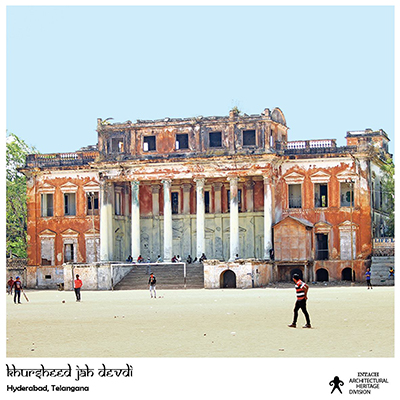
The building is located in the Charminar area of Hyderabad. Originally designed by Nawab Khurshid Jah Bahadur’s grandfather, Shams-ul-umara Amee-e-Kabir (with European influence) and completed by his father Rashiduddin Khan in the late 19th century. It houses the Hussaini Alam Government Girls’ College in the same compound. The building suffers from lack of maintenance and care. It is in an advanced state of decay owing to neglect. It appears to be a case of waiting for imminent collapse through denial of maintenance and continued deterioration.

H@R 137/365 Fingeshwar Palace Fingeshwar, Mahasamund

bldg 1
bldg 1

H@R 137/365

Fingeshwar Palace Fingeshwar, Mahasamund

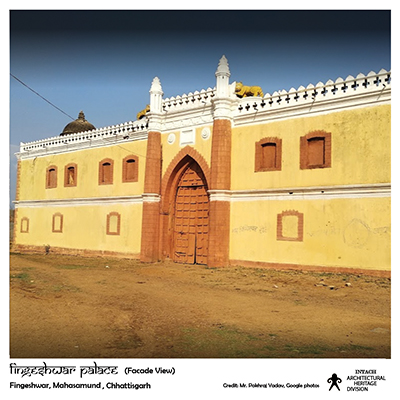
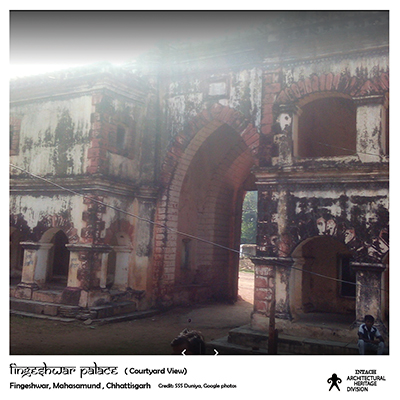
Established nearly 200 years back by Thakur Vishvanath Singh, who was the zamindar of Fingeshwar. It is believed to be one of the important forts amongst the 36 forts of Chhattisgarh. It was extremely important from the administrative and authoritative point of view. The precinct is in a very poor condition. Only a small part is used as residence; the rest is abandoned. There are many examples of forts and palaces in the country, being conserved and converted for a variety of uses. The lifespans of such structures can be increased by their continued usage, however with sensitivity to the historic materials and traditions.

H@R 136/365 Daryaganj heritage structures Delhi

bldg 1

H@R 136/365

Daryaganj heritage structures Delhi

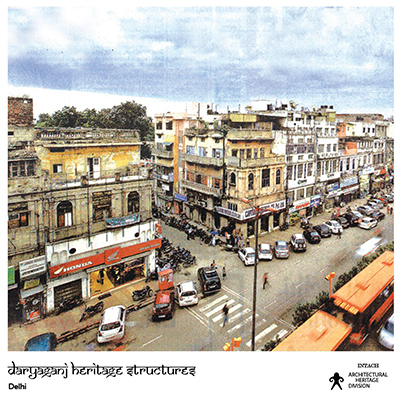
Many heritage structures on Ansari Road, Delhi date from the early 20th century. Daryaganj is within the walled city of Shahjahanabad. Like other parts of Old Delhi, it is witnessing an incongruous spectacle of commercialization and neglected heritage. Heritage structures are insensitively converted into godowns, shops, etc. Civic authorities have little knowledge about its heritage value.

H@R 135/365 Saiyed Hazrat Jalaludin ni Vav Ahmedabad, Gujarat

bldg 1

H@R 135/365

Saiyed Hazrat Jalaludin ni Vav Ahmedabad, Gujarat

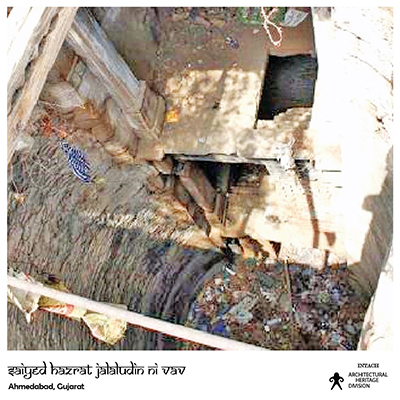
This unique stepwell is locally also known as Jajhar Vav. It is located behind Minaben Sarkari Ayurvedic Hospital, Camp Road, Girdharnagar, Ahmedabad. The stepwell has 3 levels. It has some modifications likely from the early colonial era and seems to have been in use then. A staircase was added on the north side. The historic stepwell was damaged during the 2001 earthquake. There is a trending disregard for historic water systems.

H@R 134/365 LIC Buildings Kolkata, West Bengal

bldg 1

H@R 134/365

LIC Buildings Kolkata, West Bengal

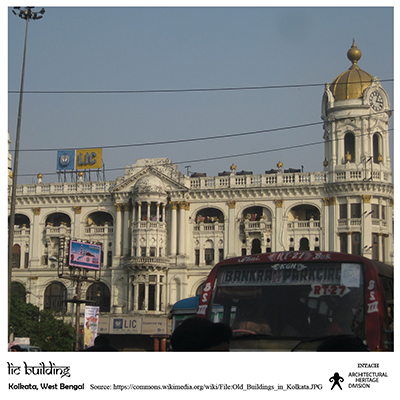
A number of structures such as LIC Buildings are from the British period. Many are deteriorating due to neglect. Structural safety eventually suffers and such buildings are then termed ‘unsafe’ and slated for demolition. Many public institutions own heritage structures but lack expertise in maintenance and a scientific approach to conservation of their built heritage. Thus many dilapidated civic buildings can be seen, requiring urgent repairs. The approach for many government-owned historic buildings is to let them decay through a denial of proper maintenance, later declared unmaintainable or ‘condemned’, and earmark money to pull them down. Thereafter fresh allocation of funds is made to raise modern structures in their place. Instead, a practise of regular maintenance and also reuse of such building stock can contribute positively to our resource crunch.

H@R 133/365 Baradari of Dara Shikoh Varanasi, Uttar Pradesh

bldg 1

H@R 133/365

Baradari of Dara Shikoh Varanasi, Uttar Pradesh

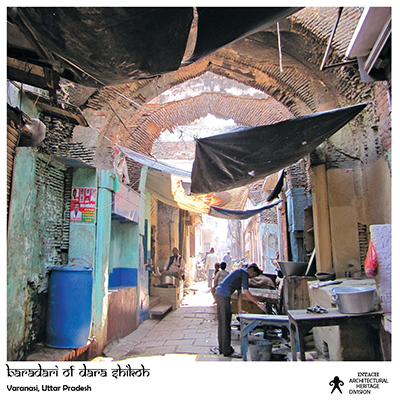
According to local tradition, Dara Shikhoh, the eldest son of Shah Jahan, spent time here translating the Sanskrit Upanishads into Persian. While the baradari indeed dates back to the first half of the 17th century, the British later used it as an adalat, or place of justice. The main baradari has been demolished a few years ago. There are still a few traces remaining, such as the paired carved stone pilasters and the gateway arches that could still be conserved as a memorial to a very significant cultural initiative of the 17th century. This is very much a part of the role of Varanasi as a centre of learning and inquiry.