
Category Archives: Heritage at Risk Register

H@R 132/365 Dhowra Baoli Bundi, Rajasthan
bldg 1

H@R 132/365

Dhowra Baoli Bundi, Rajasthan

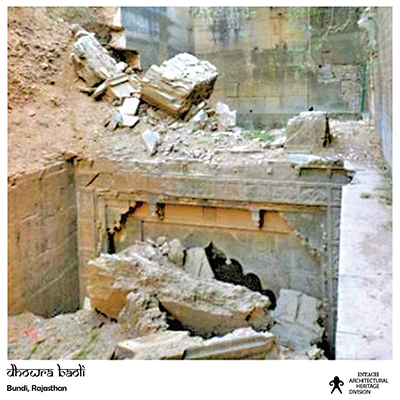
Dhowra Baoli is attributed to 17th century CE. The baoli had rich ornamentation. Around the foliated arch of the portico, in a rectangular frame, are remains of fine carved bas-reliefs. Construction techniques are clearly visible in the large portions that have collapsed. It is abandoned and in danger of disappearance. Many such historic water structures are lost to neglect. It is imperative that holistic research is undertaken to understand traditional water supply and collection techniques, as these could well form part of the solution for the current issues of climate change and sustainability.
H@R 131/365 Vasai Fort Thane District, Maharashtra

bldg 1

H@R 131/365

Vasai Fort Thane District, Maharashtra

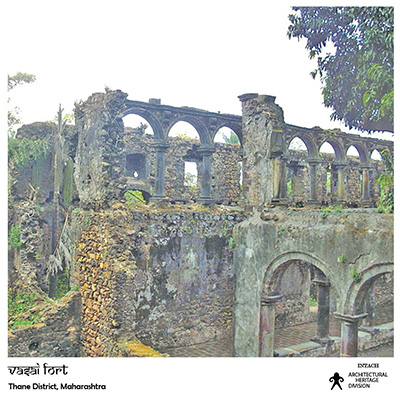
Fort Bassein, now referred to as Vasai Fort, was built in 1532 CE by the then Sultan of Gujarat, Bahadur Shah and is situated in village Vasai. Though initially, it belonged to the Arab Sultanate of Cambay, later it came under the control of the Portuguese. However, the Marathas took over the fort in 1739. The fort is currently in ruins. In the 18th century, the fort was captured by Chimaji Appa after a three year long campaign. There is a statue of Chimajiappa in Vasai fort. What remains are the parts of the imposing 4.5 kms long fort walls, two access doors (‘Porta do Mar’ and ‘Porta da Terra’) and remnants of Portuguese buildings and churches dating from the 16th and 17th centuries.

H@R 130/365 Jumerati Gate Bhopal, Madhya Pradesh

bldg 1

H@R 130/365

Jumerati Gate Bhopal, Madhya Pradesh

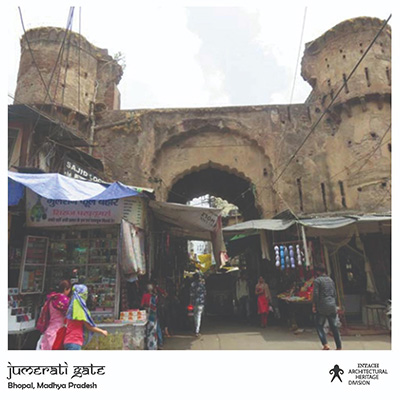
Jumerati Gate lies in the old city of Bhopal near Jumerati Bazaar. Nawab Dost Mohammad Khan fortified the city and built the Fatehgarh fort during 1720-1726 CE. The gate was built in the 18th century, along with the stone wall, for the protection of the fort and the public residing there. Jumerati is one of the six gates built and named after different days of the week. It was built in the Indo-Afghan style of architecture, constructed in coarse rubble masonry with lime mortar and covered with stucco. Low maintenance of the gate has resulted in cracks and weakening of the structure, as well as vegetation growth. Electrical wires and water pipelines are destroying visual integrity. The gate is surrounded by shops from all sides.

H@R 129/365 Gopal Mandir Raipur, Chhattisgarh

bldg 1

H@R 129/365

Gopal Mandir Raipur, Chhattisgarh

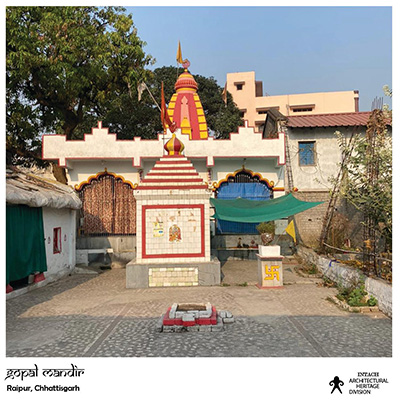
Located in Purani Basti, Baniyan Para, Raipur. Established in 1834 by Late Mahant Hardev Nihang Das, the temple has been a centre for local religious and spiritual fervour. Built in the same pattern as the Dudhadari Math, it indicates links with the cultural history associated with it. The building has had some interventions that are incompatible with the historic fabric. Signs of material degradation are visible.

H@R 128/365 Bohra Havelis Sidhpur, Gujarat

bldg 1

H@R 128/365

Bohra Havelis Sidhpur, Gujarat

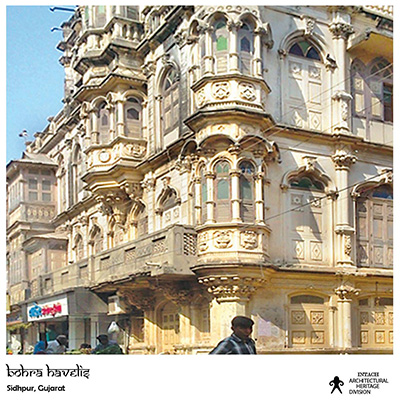
All throughout India, there are examples of residential architecture built between 19th and 20th centuries, which were usually built by traders, merchants and other well-off middle-class Indians during that time. These buildings use a variety of sources and inspirations for the elements of design and ornamentation they employ. The houses of Bohra neighbourhoods in Gujarat towns such as Sidhpur and Kapadvanj are examples of such residential buildings (havelis). Due to migration and lack of funds, 19th century Bohra Havelis now have fewer caretakers or proprietors. They are in need of preservation.

H@R 127/365 Library Dara Shikoh Agra, Uttar Pradesh

bldg 1

H@R 127/365

Library Dara Shikoh Agra, Uttar Pradesh

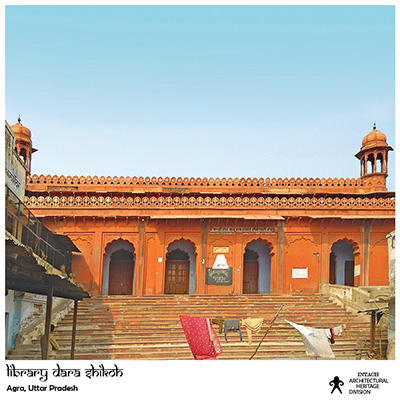
The 17th century CE building is located at Daresi, Moti Ganj, Kotwali Ward, Agra. This is one of the havelis built by Dara Shikoh in Agra, said to be his library. Post-1857, this was one of the buildings auctioned by the British. In 1882, the Municipal Hall was instituted in this building. The building was converted into a school and is in use. Other than maintenance issues, there is another peculiar threat to the building – threat of safety from monkeys, that are rampant in the area.

H@R 126/365 Thanagazi Fort Alwar, Rajasthan

bldg 1

H@R 126/365

Thanagazi Fort Alwar, Rajasthan

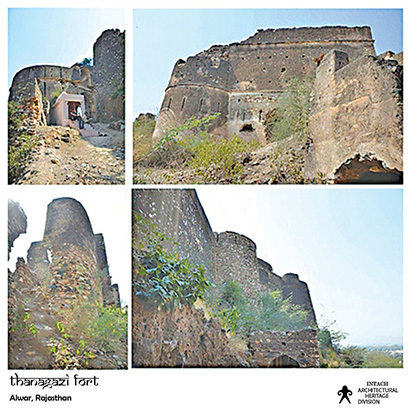
Thanagazi Fort was built in late 1700s by Rav Raja Pratap Singh after he took over Alwar. This was one of the many forts constructed in his reign. It is located in Thanagazi village, 40kms from Alwar city and near Sariska Tiger Reserve. The fort is situated on a small hill, and surrounded by Thanagazi local market and farms. Constructed in stone with lime mortar. It is not in use and is under the management of PWD. The structure is in danger of disappearance. Most of the fort walls and roofs have already fallen apart. Wooden joists of the ceilings of the structure are deteriorating.
Location 27° 24’ 00.5796”N, 76°19’ 11.73”E

H@R 124/365 Mohura Water Channel Uri, Kashmir

bldg 1

H@R 124/365

Mohura Water Channel Uri, Kashmir

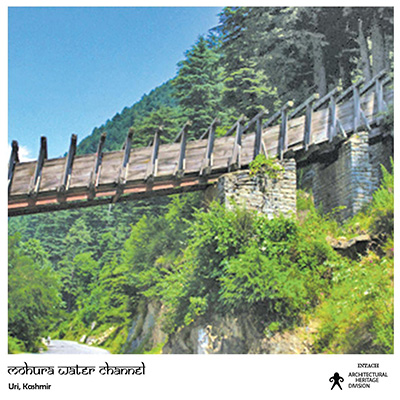
Constructed during the reign of Maharaja Pratap Singh of Kashmir. 1885-1925. It is a unique wooden channel that carried water from Jhelum to the power plant in Mohura. It is in danger of disappearance. Kashmir has also lost most of its wooden bridges and the few that are left are also vulnerable to demolition. Urban infrastructure-related schemes have also taken their toll on the vernacular residential architecture of the region. Added to this damage, is the increasing loss of some of the traditional building crafts and the technical knowledge associated with them.

H@R 123/365 Capitol Cinema Mumbai, Maharashtra

bldg 1

H@R 123/365

Capitol Cinema Mumbai, Maharashtra

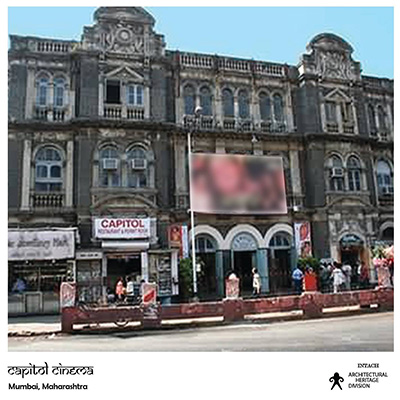
Situated in the Fort area of Mumbai, the building dates from 1879 CE. Capitol theatre is the dilapidated cinema hall next to CST station. Capitol building is one of the historic structures in Mumbai. The tenants of the building bought it over and turned it into a theatre in 1982. There hasn’t been much renovation since then. It is in a state of deterioration and neglect. Contemporary research has numerous examples exploring the adaptation of spaces for their optimum use.

H@R 122/365 Haveli Chandni Chowk, Delhi

bldg 1

H@R 122/365

Haveli Chandni Chowk, Delhi

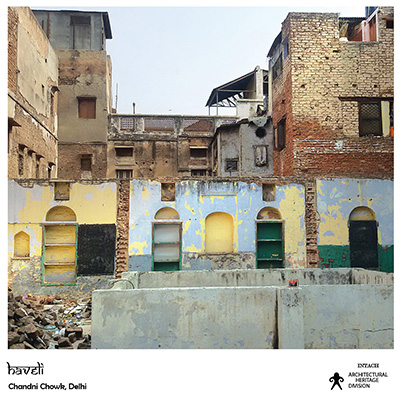
Haveli 328 located in Kucha Ghasi Ram, Chandni Chowk. Was part of the traditional residential architecture of the area in Old Delhi. It was under demolition when last visited. The haveli was used as a school in the recent past. It had very high potential for reuse. The practise of considering reuse must be stipulated as the first course of action for the historic building stock. It is disgraceful that built heritage resources are allowed to be neglected and destroyed rather than be reused, which should be the way forward towards sustainability and revenue generation.