Category Archives: Heritage at Risk Register

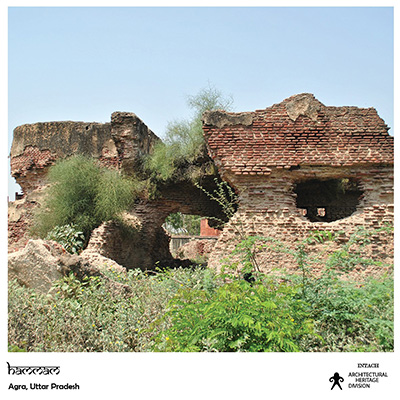
H@R 112/365 Hammam Agra, Uttar Pradesh

bldg 1

H@R 112/365

Hammam Agra, Uttar Pradesh

The hammam is located at Yamuna Bridge Station Road, Moti Bagh, Agra. The 17th century CE structure was built under the patronage of Emperor Shahjahan. It lies abandoned in a dilapidated state, in an open area full of wild vegetation and debris.

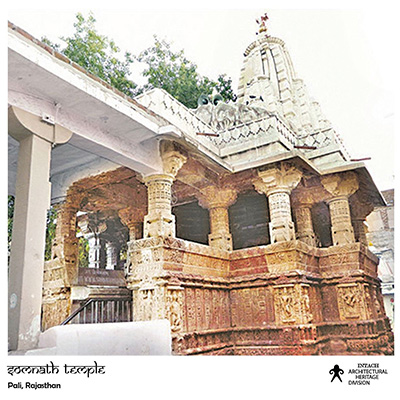
H@R 111/365 Somnath Temple Pali, Rajasthan

bldg 1

H@R 111/365

Somnath Temple Pali, Rajasthan

Situated in the middle of Pali City, Somnath Temple was constructed in Vikram Samvat 1209 CE. Prince Raj Kumar Pal Solanki of Gujarat brought the Shivlinga from the Saurashtra area because Somnath Temple and Somnath Mahadev were the targets of attack by Mahmud of Ghazni. The temple has a special sanctity. It has intricate carvings on the shikhar and pinnacle and meticulously chiselled circular patterns on the ceiling. The ancient statues and sculptures are facing erosion. There are issues of lack of maintenance as well as encroachments.

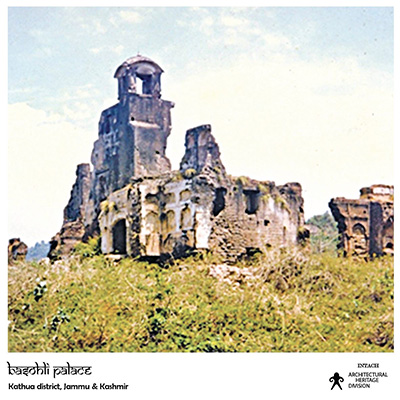
H@R 110/365 Basohli Palace Kathua district, Jammu & Kashmir

H@R 110/365

Basohli Palace Kathua district, Jammu & Kashmir

The remnants of Basohli Fort are situated in Basohli city, Kathua district, about 125 km away from Jammu. This is the place that is known for Pahari school of paintings. The plight of abandoned palaces in India can be understood by cases like the remnants of the Basohli Palace. The 17th century palace is in ruins. Abandoned and unused portions of forts and palaces must be considered for public uses, with a clear guidance for maintaining conservation standards.

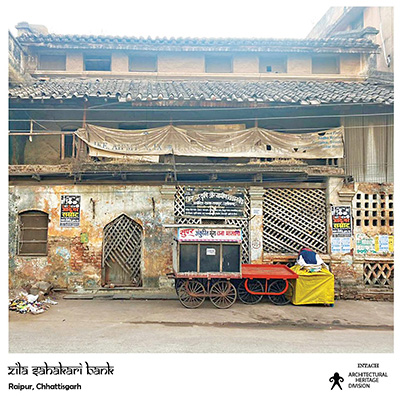
H@R 109/365 Zila Sahakari Bank Raipur, Chhattisgarh

bldg 1

H@R 109/365

Zila Sahakari Bank Raipur, Chhattisgarh

Located at Kali Badi Road, City Kotwali Chowk, Raipur. Zila Sahakari Bank was established on 13th May 1935 during the British regime to facilitate proper growth and development in the rural agricultural sector. It lies in a dilapidated condition, at risk of demolition. A reuse policy must be instated to mandate utilization of historic building stock for public projects. It is imperative that efforts are escalated for heritage awareness of owners and users. Innovative linkages with existing schemes, technical assistance and guidance, traditional material subsidies as well as matching grants should be made available as incentives for upkeep, to save historic building stock.

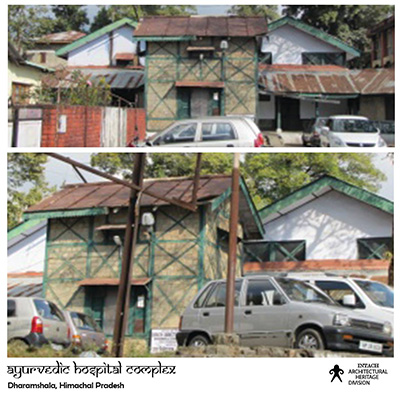
H@R 108/365 Ayurvedic Hospital Complex Dharamshala, Himachal Pradesh

bldg 1

H@R 108/365

Ayurvedic Hospital Complex Dharamshala, Himachal Pradesh

Located in Civil Lines, Dharamshala. The building is double storeyed with pitched CGI roofs. It has ashlar stone wall masonry carefully provided with wooden ties at floor, cill, lintel and roof level, as well as timber cross-bracing. It is a tangible embodiment of anti-seismic measures adopted after the 1905 earthquake for lifeline buildings. The historic hospital building and complex needs preservation.

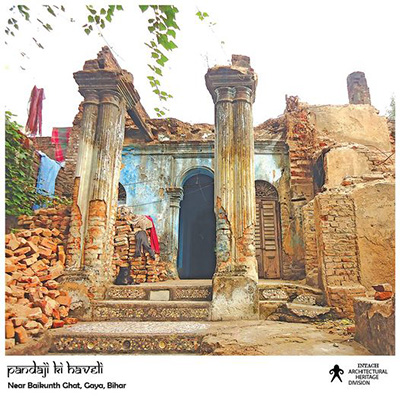
H@R 107/365 Pandaji ki Haveli Near Baikunth Ghat, Gaya, Bihar

bldg 1

H@R 107/365

andaji ki Haveli Near Baikunth Ghat, Gaya, Bihar

This residence in Upardih Muhalla is from late 19th century. It is one of the few remaining historic Panda houses in Gaya. Parts of the building are still in use. The rest are under serious deterioration and ruin. Incentives must be offered by local and State authorities for owners of historic houses to retain and maintain them. The historic built fabric is at risk of incompatible additions, alterations and replacement that are out of context and character of the area. The pilgrimage rituals of daily, weekly and annual cycles and the vast footfall during festivities challenge the limited natural and municipal resources of Gaya.

H@R 106/365 Havelock Bridge Rajamahendravaram, East Godavari District, Andhra Pradesh

bldg 1
bldg 1

H@R 106/365

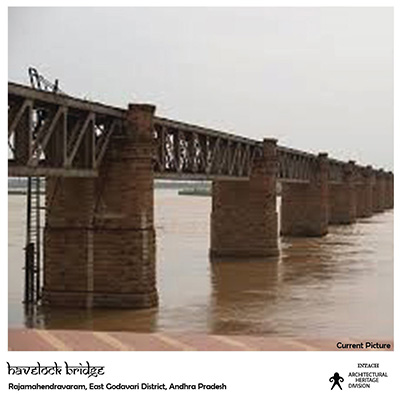
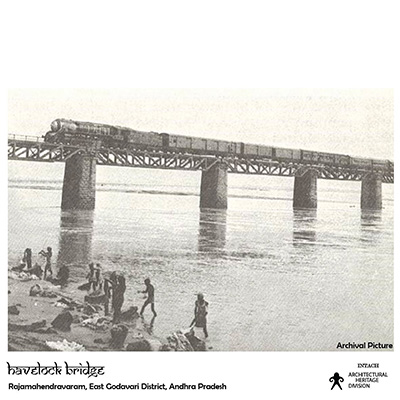
Havelock Bridge Rajamahendravaram, East Godavari District, Andhra Pradesh

Old Godavari Bridge or Havelock Bridge was commissioned in 1897. It served trains plying between Howrah and Madras. It is the earliest of 3 bridges that span the Godavari River at Rajahmundry. A decommissioned bridge, it is proposed as a tourist destination with a heritage bazaar, after acquiring it from Railways. Any proposal may be beneficial only after necessary conservation and safety measures to the site.

There are about 20 bridges and causeways across the Gosthani, Sarada and Varaha rivers. Most of these stone and brick marvels are in a dilapidated condition. They were decommissioned mainly due to increasing traffic and the need for modern structures. These structures can be used to teach engineering students the basics of civil engineering and better quality as they bear testimony to the prowess of engineers, who toiled hard to connect the entire subcontinent.

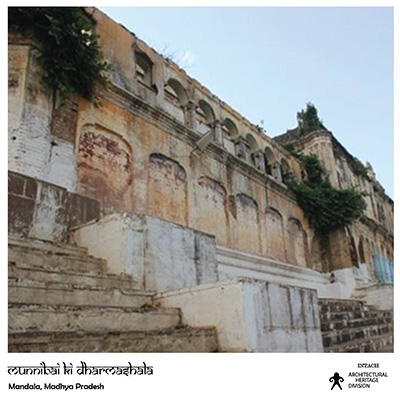
H@R 105/365 Munnibai ki Dharmashala Mandala, Madhya Pradesh

bldg 1

H@R 105/365

Munnibai ki Dharmashala Mandala, Madhya Pradesh

Located at Purvi Ghats, Mandala. The dharamshala was constructed by the Agrawal community in late 19th century and was used for pilgrims. It shows signs of deterioration, dense vegetation growth and is not in use now. Reuse potential must be explored especially of havelis, dharmashalas and abandoned heritage properties. Adaptive reuse will ensure maintenance and their integration with the daily lives of the local community as well. Reuse of heritage structures could become a tool for economic generation for the locals and also motivation for other owners to reuse their structures appropriately.

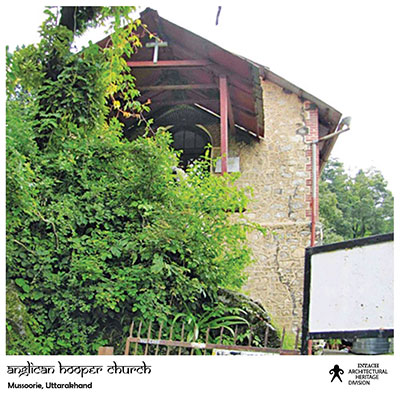
H@R 104/365 Anglican Hooper Church Mussoorie, Uttarakhand

bldg 1

H@R 104/365

Anglican Hooper Church Mussoorie, Uttarakhand

Located in Katesar Hill area, Mussoorie. The small Anglican community chapel is from the 1890s. It is associated with Rev. William Hooper, Sanskrit scholar and author of Urdu-Hebrew and Greek-Hindi dictionaries, Chaplain to Lucknow Bishop. The church is in a state of decay.

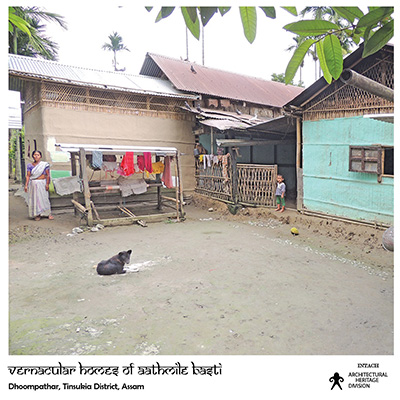
H@R 103/365 Vernacular homes of Aathmile basti Dhoompathar, Tinsukia District, Assam

bldg 1

H@R 103/365

Vernacular homes of Aathmile basti Dhoompathar, Tinsukia District, Assam

Latitude: 27.850211, Longitude: 95.750322, Elevation: 126 m. The settlement of over 360 homes extends from aath mile to nou mile, Dhoompathar (Sunpura-Sapakhua road), Tinsukia District. This is about a 100 years old settlement with ‘Assam type’ architectural style. Regular floods, even upto 2-3 times a year are a major threat. Traditionally, cheshmabera is a bamboo and timber wall covered with mud plaster. Although replaced with cement in place of mud, the cheshmabera technique is still in use. GI/ tin sheets are often used now instead of kher roof covering (material derived from plantations).

H@R 103/365 Vernacular homes of Aathmile basti Dhoompathar, Tinsukia District, Assam