Category Archives: Heritage at Risk Register

H@R 102/365 Gebansha Bawa Dargah & Bala Pir Dargah Ahmedabad, Gujarat

bldg 1
bldg 1

H@R 102/365

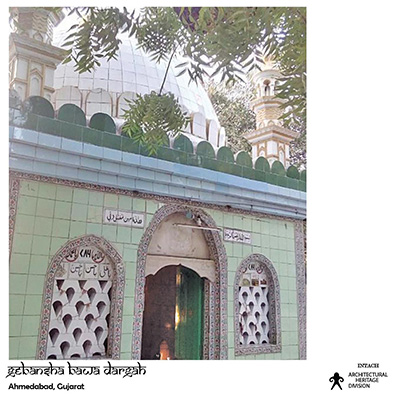
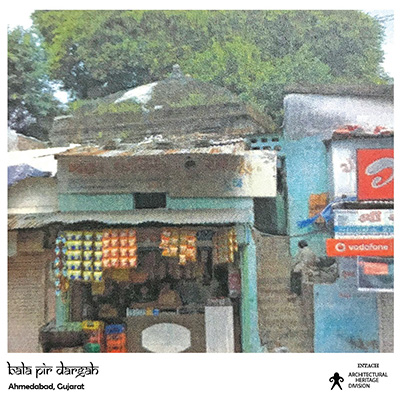
Gebansha Bawa Dargah & Bala Pir Dargah Ahmedabad, Gujarat

Located at Balpir no Tekro, opposite Kalyan Gram Society, outside Shahpur Darwaja, Ahmedabad. The site consists of historic tombs of saints from 17th to 18th century CE (Aurangzeb’s rule). They are in poor condition. Incompatible additions and alterations can be seen.

H@R 102/365 Gebansha Bawa Dargah & Bala Pir Dargah Ahmedabad, Gujarat

H@R 101/365 New Empire Theatre Kolkata, West Bengal

bldg 1

H@R 101/365

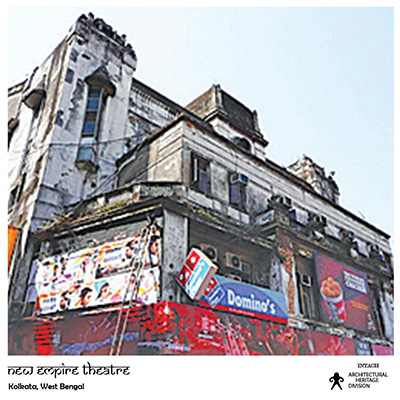
New Empire Theatre Kolkata, West Bengal

Located at Humayun Place, New Market, Kolkata. Theatres like New Empire Cinema remain a landmark since 1932. It is one of the few standalone cinemas in the area that has managed to survive. However, the art deco architecture is eclipsed by a flurry of food shops and their logos. With flourishing fast-food outlets, the ground floor is buzzing with students and shoppers. The open bar has been shut down, but there is a bar and a restaurant on the first floor. The box-office counter was newly done up.

H@R 101/365 New Empire Theatre Kolkata, West Bengal

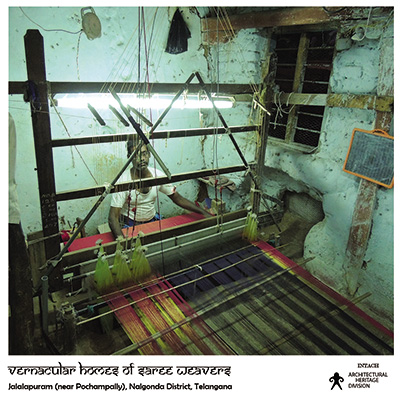
H@R 100/365 Vernacular homes of saree weavers Jalalapuram (near Pochampally), Nalgonda District

bldg 1
bldg 1

H@R 100/365

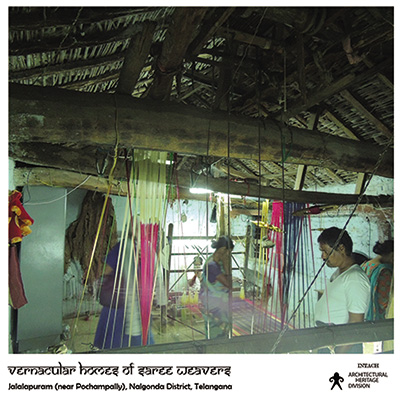
Vernacular homes of saree weavers Jalalapuram (near Pochampally), Nalgonda District

We have reached our 100th post of H@R. Though heritage being at risk is not something to be celebrated, nevertheless it is a milestone in the campaign to bring lesser known sites to attention. Do help us in providing a connect with the local community and authorities, so we can facilitate saving such sites.

‘Iconic Saree Weaving Clusters of India’ is on UNESCO’s Tentative List for World Heritage sites. The clusters span across 5 states of the country, Telangana being one of them. The dual-purpose vernacular architecture, located in traditional community clusters, is an extremely critical aspect of keeping alive the ancient craft of handloom weaving. The well-functioning plan has developed from the livelihood needs of the inhabitants. Every member of the family is involved in the various processes related to weaving. This 70 year old house was under severe threat of disappearance, and has been lost due to pressures of urbanisation and the lack of adequate support.

H@R 100/365 Vernacular homes of saree weavers Jalalapuram (near Pochampally), Nalgonda District

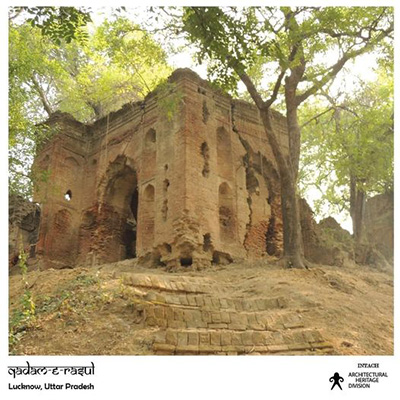
H@R 99/365 Qadam-e-Rasul Lucknow, Uttar Pradesh

bldg 1

H@R 99/365

Qadam-e-Rasul Lucknow, Uttar Pradesh

This monument known as ‘Qadam Rasool’ (Prophet Muhammad’s Footprint) was built by Nasir-Ud-Din Haider in the Kingdom of Awadh. It was built near Imambara Shah Najaf on the bank of Gomti River, along Lucknow Riverfront. According to popular belief, the impression of the believed footprints of Muhammad on black stone, was brought from Mecca, by some distinguished pilgrim. During the 1857 War of Independence, the relic was removed. The structure is in a ruinous condition and on the verge of collapse.

H@R 99/365 Qadam-e-Rasul Lucknow, Uttar Pradesh

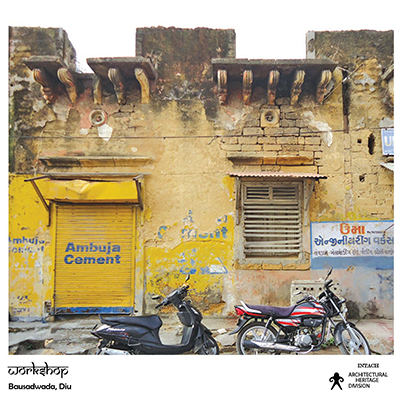
H@R 98/365 Workshop Bausadwada, Diu

bldg 1

H@R 90/365

Workshop Bausadwada, Diu

Ornate architectural elements can be seen in the workshop building, which belongs to 1900 CE. It is located 80 metres southwest of Sabzi Mandi, Bausadwada. It faces lack of maintenance and insensitive renovation. One of the major issues for the decay of heritage structures in Diu is biological growth (algae and vegetation) and dampness, which has caused many structures to fall apart. People have come up with numerous methods to repair their structures but few of the structures are left untouched in a dilapidated state. Lack of awareness and economic conditions contribute towards the issues of decay in historic buildings.

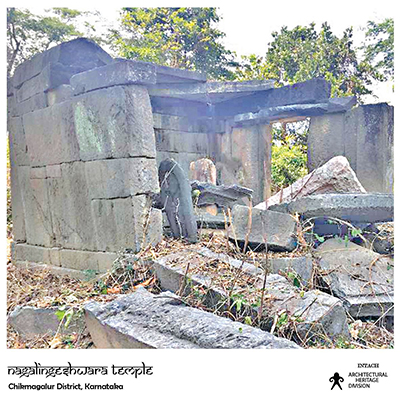
H@R 97/365 Nagalingeshwara Temple Chikmagalur District, Karnataka

bldg 1

H@R 90/365

Nagalingeshwara Temple Chikmagalur District, Karnataka

Today being a Monday in the Holy month of Saawan, the Heritage at Risk Register entry is of a temple dedicated to Lord Shiva. Located in Chikmagalur District, on the outskirts of Bhadra Wildlife Sanctuary, the Nagalingeshwara Temple is one of the many Shiva temples in the region. Stone inscriptions found in the complex reveal that the temple dates back to 14th century. It lies is a dilapidated condition with collapsed roof and walls. There are parts of the boundary wall visible, however majority of it remains unearthed. Due to lack of maintenance and excessive vegetation growth, the temple is in a ruinous state. Following a request from community members, a preliminary assessment was undertaken as part of technical assistance offered by INTACH.

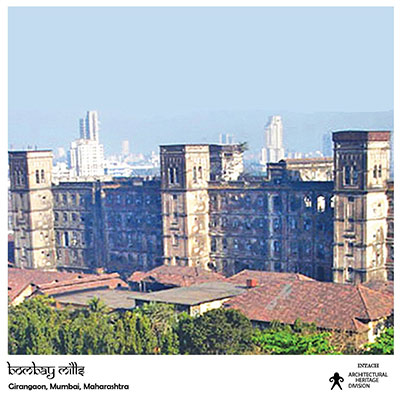
H@R 96/365 Bombay Mills Girangaon, Mumbai, Maharashtra

bldg 1

H@R 96/365

Bombay Mills Girangaon, Mumbai, Maharashtra

The 19th century CE textile mills of Bombay today are identified with approximately 500 acres of prime land they occupy in the centre of the city, worth high real estate value. They are remnants of an industrial economy that lived its age of optimum production. It has outlived its utility and the vestige of this industrial heritage is in danger of disappearance. High-end malls and corporate complexes have replaced the mills. The mills have potential to be exemplary models of adaptive reuse.

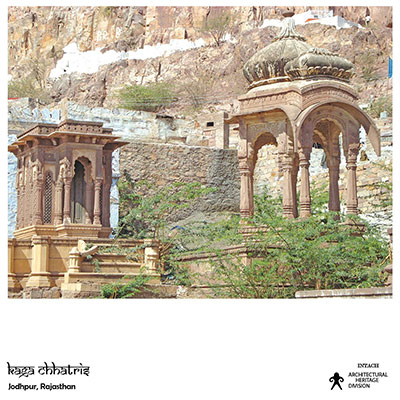
H@R 95/365 Kaga Chhatris Jodhpur, Rajasthan

bldg 1

H@R 95/365

Kaga Chhatris Jodhpur, Rajasthan

17th to 19th century CE memorials to Rajput Sardars. There are a lot of encroachments at the heritage site and unhygienic conditions exist due to throwing of garbage and the premises being used as public toilets. It is at a place which was called Kaga Teerth at some point of time. Most of the inscriptions have been destroyed; only some are found scattered. Due to this it becomes difficult to identify the chhatris. A crusher placed near the site a few years ago leads to an immense amount of dust along with the vibrations, proving harmful for the heritage site. Other than Shitla Mata Temple and its pond, there are around three hundred old chhatris (memorials) built of the Rajput Sardars. More than 100 memorials are on the verge of being destroyed due to negligence.

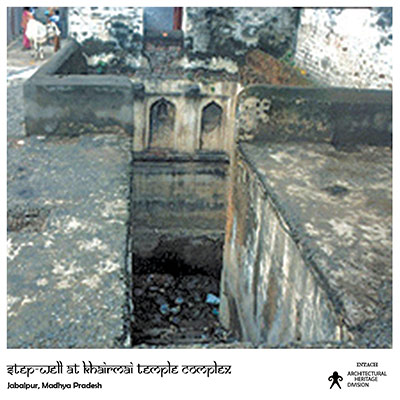
H@R 94/365 Step-well at Khairmai temple complex Jabalpur

bldg 1

H@R 94/365

Step-well at Khairmai temple complex Jabalpur

Associated with several gatherings which took place before Independence of India. It has partially collapsed, filled with vegetation growth, soil and used as a dumping area. This is the most common state of historic water structures across the country, due to sheer apathy and insensitivity towards them. The stepwell at Khairmai temple complex, under the ownership of temple trust has lost its cultural significance since it is not in use. Though it has been repaired a few times by the trust, yet it has lost its original context and shows signs of material deterioration.

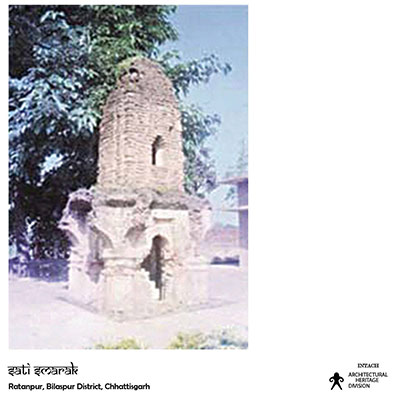
H@R 93/365 Sati Smarak Ratanpur, Bilaspur District, Chhattisgarh

bldg 1

H@R 93/365

Sati Smarak Ratanpur, Bilaspur District, Chhattisgarh

The ancient town of Ratanpur was once capital of the Kalachuris. The Sati Smarak is approximately 315 years old. It is in a deteriorating condition; the minarets are collapsing. It is a memorial to commemorate the Sati practice of the Queens of Ratanpur, the most important being the Bada Bhavan. This is the most significant stambh of the Bees Duvariya, which heralds the Sati of 20 queens of the then King Raja Laxmansahay.