
Category Archives: Heritage at Risk Register

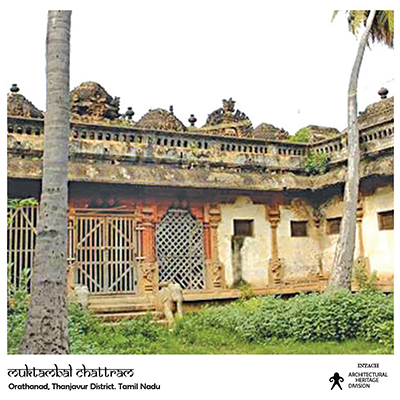
H@R 61/365 Muktambal Chattram Orathanad, Thanjavur District. Tamil Nadu
bldg 1

H@R 61/365

Muktambal Chattram Orathanad, Thanjavur District. Tamil Nadu

Many structures in the region were built of mud, bricks, timber and other such perishable materials and hence, have not survived. The earliest surviving secular buildings are the palaces and military structures of the Vijayanagar-Nayak and Maratha dynasties (14th to 19th century). Maratha period buildings like chattrams (resthouses or inns) in the Thanjavur area such as Muktambal Chattram in Orathanad and traditional residences in many parts of rural Tamil Nadu are under severe threat. The Chattram was built by Sarfoji Raja II in 1802 CE and now is in a state of neglect. The lack of user-friendly guidelines for such buildings adds to the challenges.
H@R 62/365 Muktambal Chattram Orathanad, Thanjavur District. Tamil Nadu

bldg 1

H@R 62/365

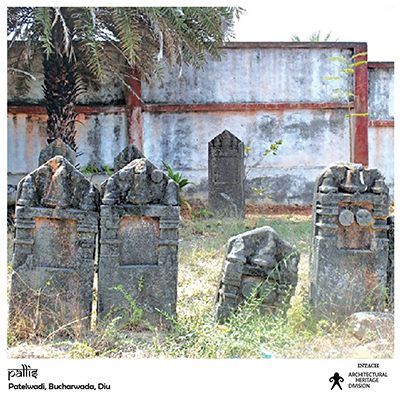
Pallis Patelwadi, Bucharwada, Diu

Various pallis scattered across Diu are inscribed with a certain year which corresponds to the 14th-17th century CE. These belong to varied communities prevalent during that period. Christian tombstones and stone tablets are also found scattered around different church and cemetery complexes. These lie abandoned in different parts of Diu with severe signs of deterioration. These could provide sufficient information as far as archaeological research is concerned and hence need timely preservation.

H@R 60/365 Jogimara Gufa Surguja, Chhattisgarh

bldg 1

H@R 60/365

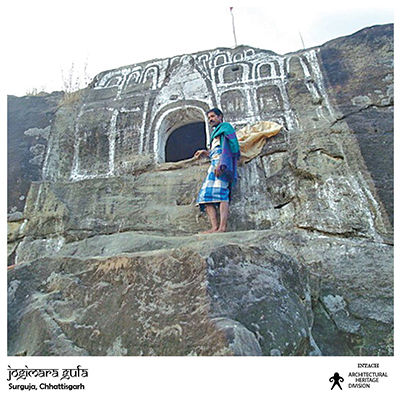
Jogimara Gufa Surguja, Chhattisgarh

The ancient cave is situated at Ramgarh hills of Surguja district (Kudargadh Road, Audgi, Vikaskhand, Surajpur). In local language, jogi is a hermit (tapasvi) and mara is a resting place. It is a stone cave and can accommodate up to 20-25 people. Shows signs of decay. The art heritage of Chhattisgarh, also known as Daksina Kosala, can be traced back to as early as circa 200 BCE on the basis of the word Ipadakha (Sanskrit form – rupadaksha) mentioned in an inscription in Jogimara cave. A neighbouring cave known as Sitabenga cave is considered the oldest theatre of India.

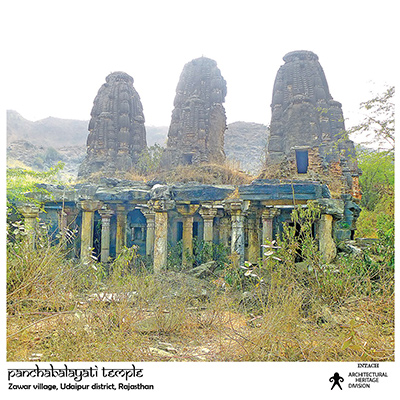
H@R 59/365 Panchabalayati Temple Zawar village, Udaipur district, Rajasthan

bldg 1

H@R 59/365

Panchabalayati Temple Zawar village, Udaipur district, Rajasthan

Zawar village is about 35 km from Udaipur. Geo-archaeological sites of Zawar are of high importance as some of the oldest in the world. The area is known for ancient zinc mines. There are significant historic temples as well. Panchabalayati Temple is from the 15th century CE and was dedicated to five Jain Tirthankars. It lies abandoned, in an advanced state of decay.

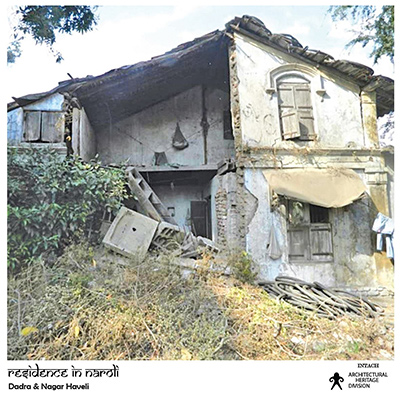
H@R 58/365 Residence in Naroli Dadra & Nagar Haveli

bldg 1

H@R 58/365

Residence in Naroli Dadra & Nagar Haveli

There are numerous unprotected heritage residences in Naroli, constructed between 1950 and 1970 under private ownership. Many are abandoned or in ruins. These are facing unintentional or sometimes even intentional failure of addressing defects in the building at their initial stages. There is lack of maintenance and timely repairs especially in those that have fallen into disuse, and this leads to structural issues. They are buildings of local importance, possessing special architectural or historical value. They form local landmarks contributing to the image and identity of the town.

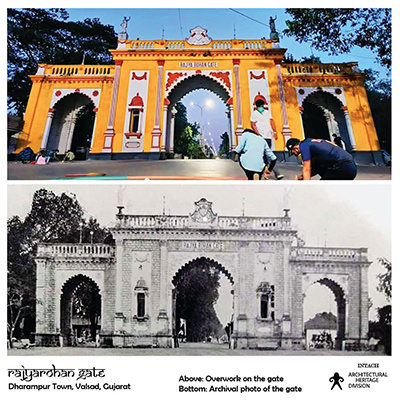
H@R 57/365 Rajyarohan Gate Dharampur Town, Valsad, Gujarat

bldg 1

H@R 57/365

Rajyarohan Gate Dharampur Town, Valsad, Gujarat

Rajyarohan Gate is a 20th century CE gate in memory of the king. It is over-plastered with cement and painted over. Over-zealous measures and interventions also pose a threat to the authenticity and integrity of unprotected built heritage.

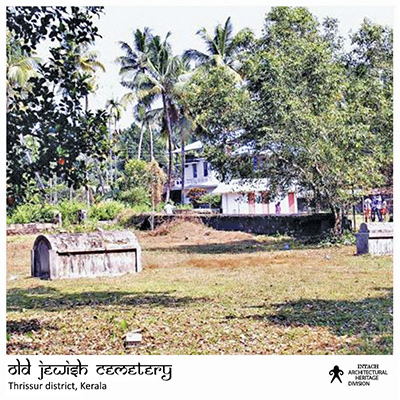
H@R 56/365 Old Jewish Cemetery Thrissur district, Kerala

bldg 1

H@R 56/365

Old Jewish Cemetery Thrissur district, Kerala

The 2000 years old Jewish cemetery at Mala, Thrissur district, is under threat. Only 3 of about 30 graves exist. There is continued apathy of authorities allowing encroachment and neglect in the precincts of the two millennia old Jewish Cemetery. This is further threatened by construction of a stadium and museum gallery.

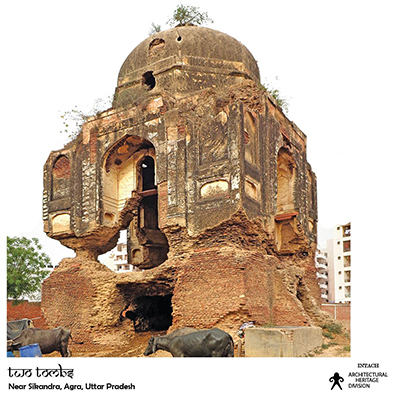
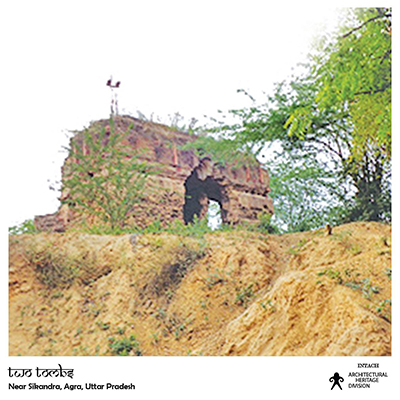
H@R 55/365 Two Tombs Near Sikandra, Agra, Uttar Pradesh

bldg 1
bldg 1

H@R 55/365

Two Tombs Near Sikandra, Agra, Uttar Pradesh

Two tombs are located nearly 500m to the west of Kaanch Mahal, Sikandra, Agra. They are from mid-16th century CE and in danger of disappearance, despite being situated near a much visited site. In the tourist destination Agra, due to the presence of a large number of protected monuments including 3 world heritage sites, the other heritage properties are ignored by the administration in terms of investment in their repair, maintenance and access. Owing to the insensitive attitude of the authorities and society, these sites become dump yards and are partially or completely transformed. Encroachment and vandalism are major concerns for unprotected heritage properties.

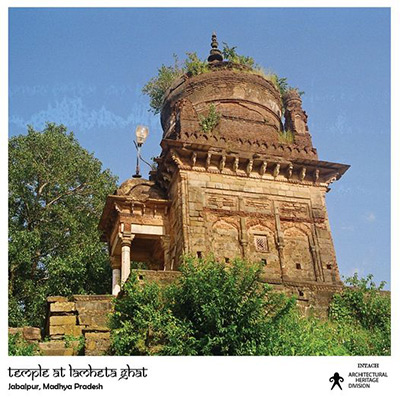
H@R 54/365 Temple at Lamheta Ghat Jabalpur, Madhya Pradesh

bldg 1

H@R 54/365

Temple at Lamheta Ghat Jabalpur, Madhya Pradesh

18th century CE temple built by Beohar dynasty, located on the banks of River Narmada. It is one of the important Shiva temples on Lamhetaghat. It shows signs of severe deterioration and extensive vegetation growth. At risk of collapse due to deep structural cracks from roots that have penetrated in the dome. The platform and steps leading to the river bank are in a dilapidated condition.

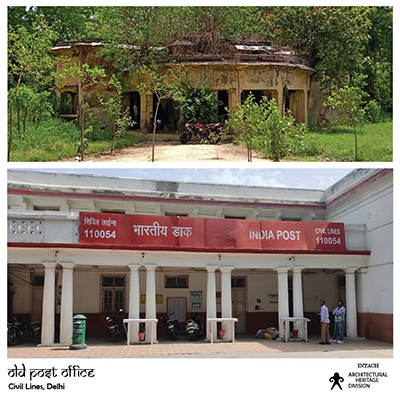
H@R 53/365 Old Post Office Civil Lines, Delhi

bldg 1

H@R 53/365

Old Post Office Civil Lines, Delhi

Post offices form part of our civic built heritage. The Old Post Office is from the 1850s and is located in Delhi’s Civil Lines area on Shamnath Marg. It is a rare example of early colonial style, which has survived till date in its original design. Its proximity to Delhi’s Vidhan Sabha and Metcalfe House also suggests its importance. The structure is abandoned and requires urgent attention. Was used as a guest house once a new post office building was constructed in 1920s (the new one continues with its original function). Old P.O. has high potential for adaptive reuse owing to its historical value and locational advantage.